 中文简体
中文简体
 English
 русский
 Español
 日本語
日本語
 Deutsch
 Tiếng Việt



+86-576-88024290
Search
08 05, 2026
Industry Updates
An oil pump is one of those parts inside an engine that rarely gets attention, but without it the whole system would not stay stable for long. Its job is not complicated in theory. It moves oil through internal channels so that different moving parts do not run dry or wear too quickly.
What makes it more interesting is how much it has changed in recent designs. Older structures were more direct, mostly metal parts doing a simple pumping motion. Now the layout is more sensitive, and the internal flow needs to respond to different working conditions in a smoother way. Because of that, some components inside the pump are no longer made from traditional materials only.
Carbon fiber plastic has started to appear in certain parts of the system, especially where movement and stability need to stay balanced over repeated use. In discussions about this shift in structure, Zhejiang Haiwei Technology Co., Ltd. is sometimes mentioned when talking about material combinations used in flow control components.
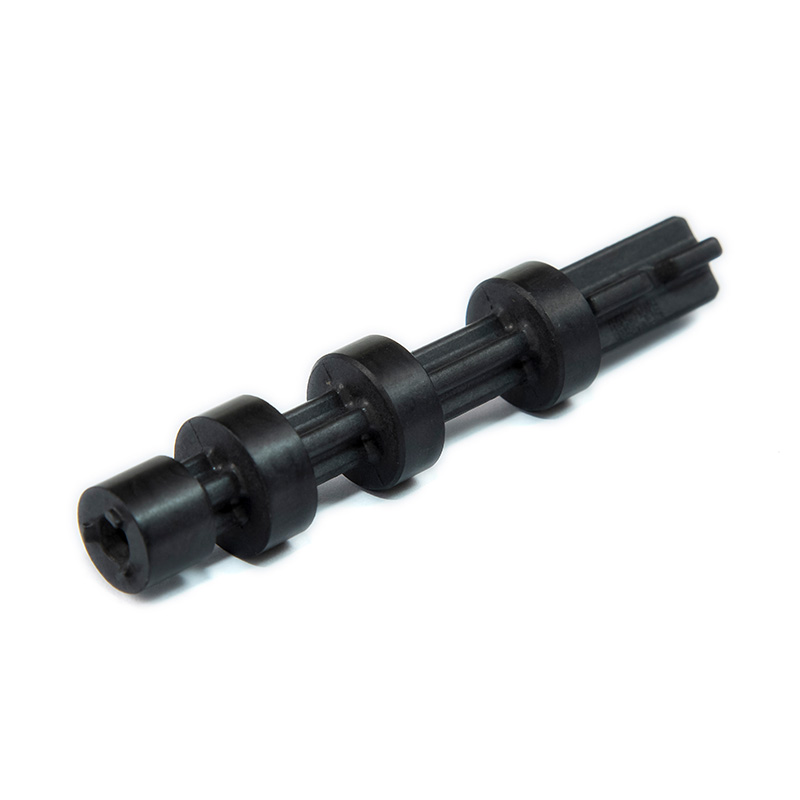
The regulating valve inside an oil pump is not a decorative or secondary piece. It is one of the parts that decides how oil is distributed inside the system. When pressure inside the pump changes, this valve reacts and adjusts the internal flow path.
In simple terms, it works like a small control point inside a moving stream. Oil does not always need to go in the same direction or at the same amount. The valve helps guide that change so the system does not become unbalanced.
When carbon fiber plastic is used in this type of component, the focus is usually not on changing what the valve does, but on how steadily it keeps doing it over time. Repeated movement, pressure variation, and constant contact inside the system all place demands on the material.
The regulating valve in this setup is mainly involved in:
It is more about adjustment than force. The movement is usually small, but the effect inside the system is continuous.
A regulating valve system in an oil pump is usually built around a small internal chamber where movement happens in a controlled space. It is not a large mechanical motion. Most of the time, the movement is subtle and tied directly to pressure changes.
When the engine starts working, oil begins to circulate. As it moves, pressure does not stay flat. It rises, drops, and shifts depending on demand. The valve reacts to this by changing its position slightly, which then changes how oil flows inside the system.
The process is usually seen like this:
Nothing here happens in isolation. The valve is constantly responding, not locking into one fixed position.
To make the structure side clearer, the table below shows how small design decisions influence what happens during use:
| Design Element | What Changes In Use | What It Affects Over Time |
|---|---|---|
| Internal channel shape | Oil movement behavior | Flow stability inside pump |
| Contact surface condition | Friction level during motion | Smoothness of adjustment |
| Material response | Reaction to repeated pressure | Consistency over cycles |
| Clearance between parts | Ease of movement | Accuracy of flow control |
These details are often adjusted together, because changing one tends to affect the others during real operation.
The drive shaft in an oil pump has a different role from the regulating valve. It does not control oil flow directly. Its job is to carry rotational motion into the pump so that internal components can keep working.
When the engine rotates, that movement needs to be transferred into the pump system. The drive shaft acts as the link that passes this motion forward. Without this connection, the pump would not maintain continuous operation.
In systems using carbon fiber plastic, the drive shaft is usually expected to handle steady rotation while keeping its shape under repeated load. It is less about visible movement and more about consistency during long operation periods.
Its main functions can be described as:
Even though it does not interact with oil flow directly, its behavior still influences how stable the regulating valve performs. If the rotation is uneven, flow control becomes less predictable.
Inside the oil pump, the regulating valve and the drive shaft are not separate systems. They are parts of the same working loop, just handling different tasks.
The drive shaft keeps the mechanical motion going. The regulating valve responds to what is happening inside the oil channels. One keeps the system moving, the other adjusts how that movement is used.
Their relationship can be understood in a simple way:
When both parts behave steadily, oil movement inside the engine feels controlled and predictable. If either part changes slightly over time, the balance inside the system also shifts.
Carbon fiber plastic behaves a bit differently from the metals usually seen inside oil pump systems. It is not used just for strength. In many cases, the reason it is chosen is how it behaves after long periods of movement, when parts are constantly rubbing, rotating, and reacting to pressure changes.
Inside an oil pump, conditions are never static. Temperature shifts, oil flow variations, and continuous mechanical motion all happen together. Under these circumstances, carbon fiber plastic tends to keep its shape without easily bending out of alignment. That is one of the reasons it appears in parts like regulating valves and drive shafts.
In regulating valve structures, the material needs to handle repeated small movements without losing its response behavior. In drive shafts, the focus is more on keeping rotation steady without introducing extra vibration into the system.
Some practical behavior traits often noticed include:
These characteristics do not act alone. They only make sense when combined with how the part is designed and how it sits inside the pump.
Design work for oil pump parts is usually more about behavior than appearance. Once the pump is running, everything inside is in motion, so even small geometry choices can influence how the system feels during operation.
For a regulating valve, the internal paths matter more than the outer shape. Oil needs a predictable route, but that route still has to adjust when pressure changes. For a drive shaft, the concern shifts toward balance and alignment, since it is constantly transferring rotation.
A few design points that usually come up in practice:
To make this easier to compare, the relationship between design focus and real behavior can be viewed like this:
| Component Area | What Designers Watch Closely | What Users Notice During Use |
|---|---|---|
| Regulating valve flow path | Oil movement consistency | Smooth or uneven pressure response |
| Valve contact surface | Sliding behavior | Stability during adjustment cycles |
| Drive shaft alignment | Rotation balance | Vibration level during operation |
| Connection points | Fit accuracy | Long-term positioning stability |
These points are usually adjusted together during development because changing one detail often affects the rest of the system.
Even when everything is designed properly, oil pump parts still change slowly over time. It is not usually a sudden failure. Instead, it is a gradual shift caused by constant movement inside a closed system.
One of the things that tends to appear is surface change where parts touch repeatedly. The regulating valve, for example, keeps adjusting its position, so the contact area never really rests. Over time, this can slightly change how smooth the movement feels.
The drive shaft also experiences long-term stress from continuous rotation. If the balance is not perfectly maintained, small variations can build up and show as mild inconsistency in motion.
Some typical long-term observations include:
These changes usually develop slowly, which is why they are often noticed during routine inspection rather than immediately during operation.
The oil pump does not work alone. It is part of a larger circulation loop inside the engine. Every movement inside the pump eventually affects how oil reaches other areas.
The drive shaft is what keeps the pump active. It carries motion from the engine into the pumping system. Without that steady rotation, nothing inside the pump would stay synchronized.
The regulating valve reacts to what the pump is doing at any moment. When pressure increases, it shifts. When flow demand changes, it adjusts again. It is constantly responding rather than staying fixed.
Together, they create a simple chain of interaction:
It is a loop that keeps repeating as long as the engine is running.
Maintenance for oil pump components is usually based on observation rather than frequent intervention. Since everything operates inside a closed system, changes happen slowly and are often easy to miss at the beginning.
The regulating valve is typically checked for how freely it moves and whether it still responds smoothly to pressure changes. If it starts feeling slightly stiff or inconsistent, it may indicate surface wear or internal buildup.
The drive shaft is more about rotation behavior. Any small imbalance can affect how smoothly it transfers motion, even if the change is not immediately obvious.
Common attention points include:
Most of the time, issues develop gradually, so they are easier to manage when noticed early.
Oil pump design has been slowly shifting toward materials that can handle repeated motion without losing stability too quickly. Carbon fiber plastic fits into this direction because it behaves in a predictable way under long-term mechanical stress.
Instead of focusing only on strength, current development trends look at how components behave after many cycles of use. That includes how valves respond to pressure changes and how shafts maintain rotational balance over time.
Some visible directions include:
These changes are not sudden. They tend to appear step by step as engine systems continue to evolve in design and operation requirements.
When the oil pump is viewed as a whole, the regulating valve and drive shaft are part of a shared working cycle. One handles motion transfer, the other handles flow adjustment, but both depend on each other to keep the system balanced.
The drive shaft keeps everything moving. The regulating valve decides how that movement influences oil distribution. Neither function is complete without the other.
In simple terms:
When both parts stay stable, the oil pump maintains a steady internal rhythm. When small changes appear in either part, the whole system begins to reflect that shift gradually, rather than all at once.
RECOMMENDED PRODUCTS

product center
Contact Info
+86-576-88024290
txm@zhejianghaiwei.com
No. 515, Jiutang South Road, TaizhouBay New District, Taizhou, Zhejiang, China.

Vehicle Rubber Seals Factory