 中文简体
中文简体
 English
 русский
 Español
 日本語
日本語
 Deutsch
 Tiếng Việt

+86-576-88024290
Search
29 05, 2026
Industry Updates
Cooling inside a vehicle depends on steady movement of liquid through a closed loop. At the center of that movement sits a small part that often gets overlooked, Automotive Water Pump Seals. Even though the size is limited, the sealing behavior influences how calm or uneven the whole flow feels during operation.
Inside the pump, rotation never really stops while the system runs. Shaft motion keeps pushing coolant around the circuit. A sealing point sits right between motion and containment. If that contact stays stable, fluid keeps moving in a controlled path. Once that contact shifts slightly, flow may start to feel less balanced.
Cooling stability is not only about pushing liquid forward. It is also about holding it in the right place while everything keeps moving.
Typical roles of sealing parts in the system:
A small seal sits quietly in the middle of all that movement, yet the system behavior often changes when it is not steady.
Inside a water pump, movement never pauses while the engine is active. A shaft rotates, and surrounding coolant keeps flowing through channels. Automotive Water Pump Seals sit between these two zones, acting like a controlled boundary.
The sealing surface stays in contact with the rotating shaft while the housing remains fixed. That contact allows motion but blocks fluid escape. It is a balance between pressure, movement, and surface touch.
During operation:
Friction appears at the contact point. That friction is expected, though it must stay controlled. Too much uneven contact may slowly disturb movement. Too little contact may allow fluid to pass where it should not.
What matters is not a single moment of contact, but how that contact behaves over many repeated cycles.
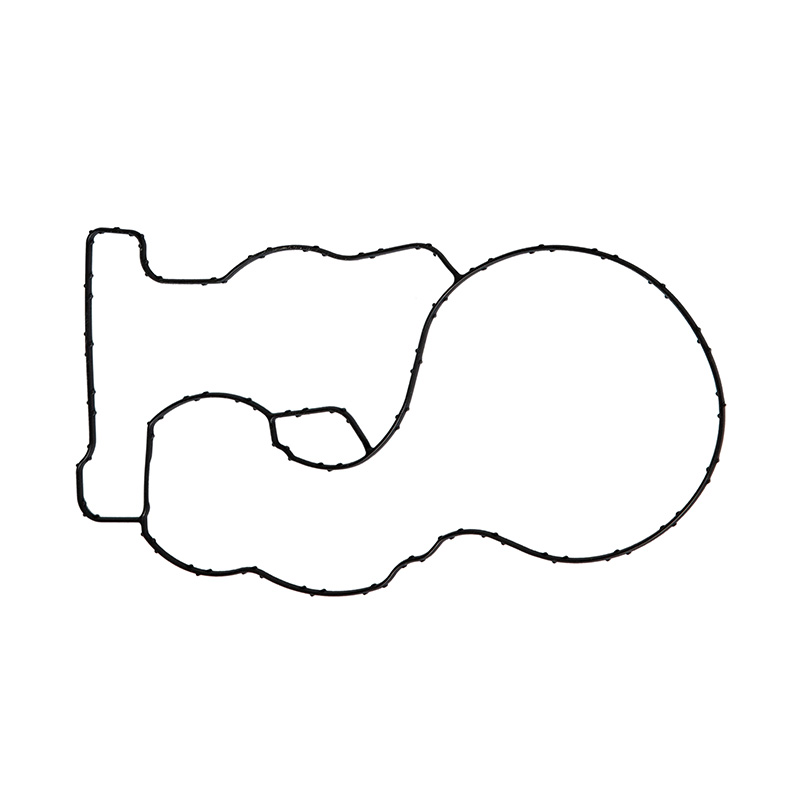
Material choice decides how long sealing behavior stays stable. Inside cooling systems, seals face heat, moisture, and continuous movement at the same time. That combination makes material behavior very important.
Many Automotive Water Pump Seals rely on rubber-based structures designed for fluid and temperature environments. EPDM rubber is often selected because it reacts in a stable way when exposed to coolant and heat changes.
Material behavior in practice usually includes:
A small comparison helps show how different properties affect system behavior:
| Material Behavior | What It Does In Seal Area | Result In Cooling System |
|---|---|---|
| Shape stability | keeps contact line steady | reduces leakage change |
| Heat response | adapts during temperature rise | supports flow balance |
| Surface resilience | resists wear during rotation | keeps contact smoother |
| Fluid resistance | handles coolant exposure | maintains sealing path |
Material is not just a choice on paper. It slowly shows its influence during every rotation cycle inside the pump.
A water pump does not rely on a single part working alone. Inside the structure, everything sits tightly together, and Automotive Water Pump Seals stay right between moving and fixed sections. Once installation happens, even a small shift in position can change how contact feels during rotation.
The seal works through pressure and touch. Shaft rotation presses against the sealing edge while coolant stays inside the chamber. When that contact line stays even, movement feels steady. When it drifts slightly, flow may not feel as calm.
Structure usually influences behavior in a quiet way:
Nothing in this system works in isolation. A small change in fit can slowly reflect in how fluid moves.
Cooling systems go through constant heat changes. Engine activity raises temperature, then cooling flow pulls it back down again. Automotive Water Pump Seals sit inside that cycle without pause.
Materials do not stay in one shape all the time. Heat makes them relax slightly. Cooling brings them back. That back-and-forth happens again and again while the pump keeps running.
Over time, that rhythm influences sealing contact:
Nothing dramatic happens in a single moment. It is more about repetition inside the system.
A sealing system depends on how well each component matches the space it goes into. Water Pump Seal Supplier consistency plays a quiet role in that fit. When parts come from uneven production, small differences can appear during assembly.
A water pump works with tight spacing. There is not much room for variation. If a seal is slightly off in shape or surface condition, it may still install, yet behavior inside the system can change.
Supplier-related influence usually shows in:
When parts feel similar from one piece to another, the system tends to behave in a more predictable way during use.
Sealing issues do not always appear as sudden failure. More often, they start with small changes that slowly become noticeable during operation. Automotive Water Pump Seals are meant to keep coolant contained, so any weakening at the contact point can affect flow behavior.
Common signs include:
These changes often build step by step, not in a single moment.
Inside a running system, movement never really stops while the engine is active. The seal stays in contact through every rotation, holding coolant inside its path and keeping separation between fluid and mechanical parts.
Over time, that repeated contact becomes part of how the system stays stable.
Long term function depends on:
When these conditions stay steady, the cooling loop tends to remain smoother during extended use.
RECOMMENDED PRODUCTS

product center
Contact Info
+86-576-88024290
txm@zhejianghaiwei.com
No. 515, Jiutang South Road, TaizhouBay New District, Taizhou, Zhejiang, China.

Vehicle Rubber Seals Factory