 中文简体
中文简体
 English
 русский
 Español
 日本語
日本語
 Deutsch
 Tiếng Việt

+86-576-88024290
Search
22 05, 2026
Industry Updates
Fluid control systems work with moving liquid inside closed mechanical spaces. Oil, hydraulic fluid, and lubrication media circulate under pressure while shafts and rotating parts keep running.
Without a sealing part, fluid slowly escapes through the narrow gap between moving shaft and fixed housing. Loss may look small at the beginning. Over time, pressure inside the system changes, and movement becomes less stable. Wear inside connected parts also increases.
Industrial Rubber Oil Seal sits in that gap area. It does not block movement in a rigid way. It creates a controlled contact zone where fluid stays inside while rotation continues.
In daily mechanical operation, sealing supports:
keeping rotation movement stable under lubrication
Industrial Rubber Oil Seal is placed around rotating shafts inside mechanical assemblies. From outside, it looks like a fixed ring. Inside function depends on constant contact between rubber lip and metal shaft.
Basic structure includes a few simple parts:
During operation, shaft rotates inside the seal while seal itself stays still in housing. Contact area remains active the whole time.
Instead of stopping motion, the seal manages what happens at the boundary between moving metal and contained fluid.
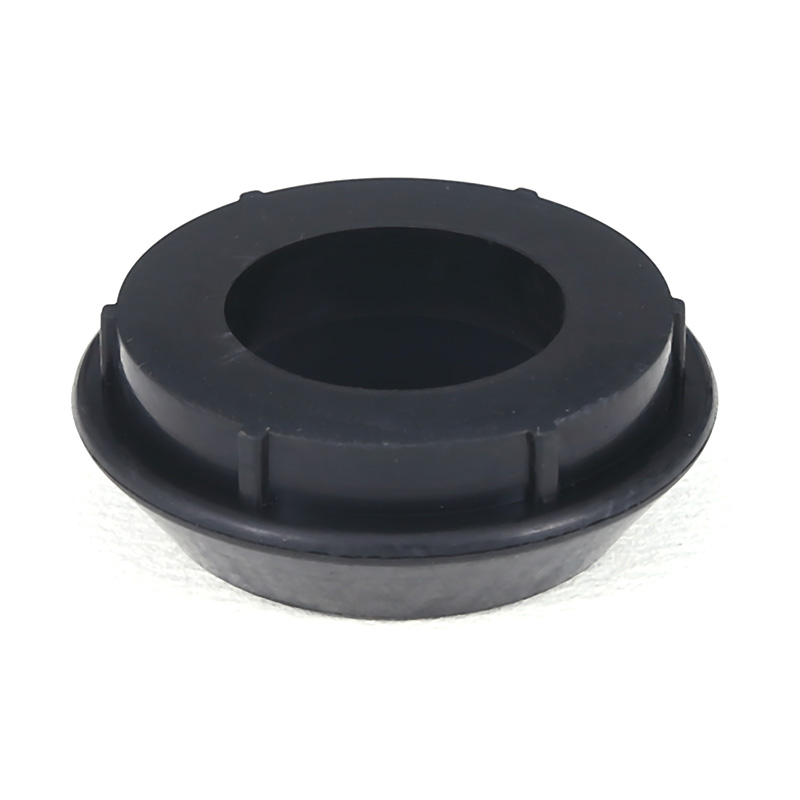
Working principle starts from contact pressure. Rubber lip presses against shaft surface. That pressure does not come from external force during operation. It comes from the material shape and fitting condition.
A very thin oil layer forms at the contact zone. That layer is not a leakage sign. It is part of normal operation. It reduces friction between rubber and rotating metal.
In real operation, three things happen together:
Movement stays smooth while fluid remains controlled inside the system.
Interference fit means inner diameter of seal is slightly smaller than shaft diameter. During installation, rubber stretches slightly and presses inward.
That small difference creates steady radial pressure. Rubber stays in contact with shaft without needing external tightening force.
In practical use, interference fit brings:
Pressure is not concentrated at one point. It spreads around full circle of shaft contact area.
Rubber is not only a soft filler material. In oil seals, it behaves like a flexible interface that reacts to motion and pressure at the same time.
During operation, rubber must:
Different systems use different rubber behavior depending on working condition. Some systems expose seals to higher temperature, others to different fluid types.
Rubber also helps absorb small vibration changes. Without that flexibility, rigid materials would create faster wear on shaft surface.
Sealing lip is the part that directly touches the shaft. It forms the real working boundary between internal fluid and outside environment.
During rotation:
In some structures, lip shape is slightly angled. That helps guide fluid direction back inward instead of letting it escape outward.
In maintenance checks, sealing lip condition often reflects system health. Even wear usually means stable operation. Uneven marks may suggest alignment or lubrication issues.
Some Industrial Rubber Oil Seal designs include a small circular spring inside the rubber body. It sits behind the sealing lip area.
Rubber can slowly relax after long use under pressure. Spring helps maintain consistent contact force against shaft surface.
Its role is simple:
Spring does not replace rubber function. It supports it during long mechanical use.
Oil Pump Seals operate in systems where fluid movement is continuous. Pump rotation creates constant circulation and pressure changes inside the system.
Seal position is usually around rotating shaft inside pump structure. Its main task is to keep fluid inside the pump chamber while shaft keeps turning.
In practical operation, Oil Pump Seals help:
Compared with static sealing areas, pump environments place more continuous stress on sealing surfaces because movement never fully stops during operation cycles.
SC and TC refer to two common structural forms used in sealing systems.
SC Type Oil Seal
TC Type Oil Seal
more layered protection at contact zone
| Feature | SC Type | TC Type |
|---|---|---|
| sealing structure | single lip | dual lip |
| dust protection | limited | additional barrier |
| contact complexity | simpler | more structured |
| usage condition | basic fluid control | environments with external particles |
Choice depends more on working environment than shape difference alone.
Inside rotating systems, shaft never stays still. Even when speed feels stable, micro vibration and surface variation keep changing contact conditions between shaft and sealing lip.
Industrial Rubber Oil Seal stays in constant contact with that rotating surface. Over time, contact line does not remain exactly the same. Small shifts begin appearing due to friction, heat, and surface wear.
In practical operation, several changes may appear:
Shaft surface condition plays a quiet role here. A smooth shaft supports steady sealing contact. A rough or worn shaft increases localized stress on rubber lip.
Sealing lip carries continuous load during operation. It presses against rotating shaft while also dealing with fluid pressure from inside the system.
Wear does not happen in one step. It builds gradually:
At early stage, system still operates normally. Fluid loss remains small. Changes become noticeable through inspection rather than visible failure.
If wear continues, small leakage paths may appear along uneven contact areas.
Rotation creates friction between sealing lip and shaft. Friction generates heat. Heat then affects rubber elasticity and oil viscosity around contact area.
In practical systems:
Industrial Rubber Oil Seal must stay flexible enough to follow these changes without losing contact stability.
Temperature does not act alone. It interacts with pressure and motion, creating a combined effect on sealing behavior.
Oil film inside sealing area is not accidental. It plays a structural role in reducing direct friction between rubber and metal.
When lubrication is balanced:
When lubrication becomes uneven:
Oil Pump Seals depend heavily on this lubrication balance because pump systems operate continuously without long pauses.
Oil Pump Seals operate in a more active environment compared with static sealing positions. Shaft rotation in pumps is continuous, and fluid pressure changes along internal channels.
Seal behavior inside pump systems includes:
Because movement never fully stops, small wear patterns appear differently compared with intermittent systems. Contact line stays active for long periods, which increases importance of surface condition.
Maintenance teams often observe seal condition indirectly. Instead of immediate failure, system behavior slowly changes.
Common signs include:
Inspection often focuses on sealing lip edge and shaft surface condition together. Both parts influence final sealing performance.
Even a well-made Industrial Rubber Oil Seal depends on correct installation inside housing. Alignment between shaft and seal must stay consistent.
Installation variation can create:
Slight misalignment does not always cause immediate failure. Over time, repeated rotation amplifies that imbalance across sealing surface.
Proper fitting allows seal to maintain circular contact rather than uneven point stress.
Fluid control systems do not operate in stable laboratory conditions. Temperature variation, external particles, and fluid type all affect sealing behavior.
Environmental influence may include:
Rubber material reacts differently under changing surroundings. Flexibility helps adapt, though repeated environmental stress gradually affects surface condition.
Oil Pump Seals are not only blocking leakage. They support internal pressure control inside circulating systems.
In pump structure:
Stable sealing behavior helps pump operate with consistent fluid movement. Even small leakage changes internal flow pattern over time.
Fluid control systems depend on balance. Pressure, flow, and lubrication work together in one closed loop.
When seal wear appears:
Industrial Rubber Oil Seal may appear as a small component, though its role connects directly to system-wide behavior.
Industrial Rubber Oil Seal operates through simple contact mechanics combined with material flexibility. Rubber lip, rotating shaft, and thin oil film create a controlled boundary that allows motion without losing fluid.
Oil Pump Seals extend that function into continuous circulation systems where pressure and movement remain active without pause.
Performance depends on alignment, material condition, lubrication balance, and long-term surface interaction rather than a single factor alone.
RECOMMENDED PRODUCTS

product center
Contact Info
+86-576-88024290
txm@zhejianghaiwei.com
No. 515, Jiutang South Road, TaizhouBay New District, Taizhou, Zhejiang, China.

Vehicle Rubber Seals Factory