 中文简体
中文简体
 English
 русский
 Español
 日本語
日本語
 Deutsch
 Tiếng Việt



+86-576-88024290
Search
15 05, 2026
Industry Updates
In many factories, sealing parts are not something people pay attention to at the beginning. When a machine is running normally, few people think about what is happening between two metal surfaces. But in real work, many small problems often start from these hidden contact areas.
Custom Seals And Gaskets are used to sit between two parts that are pressed or fixed together. Their job is not complicated to describe, but in practice they deal with a lot of small changes that happen during daily operation. Machines heat up, cool down, shake a little during running, and sometimes carry pressure that changes from time to time. All of this happens while the machine is still working.
The same thing happens in air systems. When air pressure is stable, equipment works in a steady rhythm. But if sealing contact is not tight enough, the system may take longer to build pressure. Workers usually notice it not by looking inside, but by feeling that the machine is not as responsive as before.
Oil systems show another common situation. Oil is supposed to stay inside a closed path, moving through parts that need lubrication. When sealing is not stable, oil slowly finds its way out through small gaps. It does not always drip immediately. Sometimes it just leaves a thin mark around a connection area, which later becomes more visible.
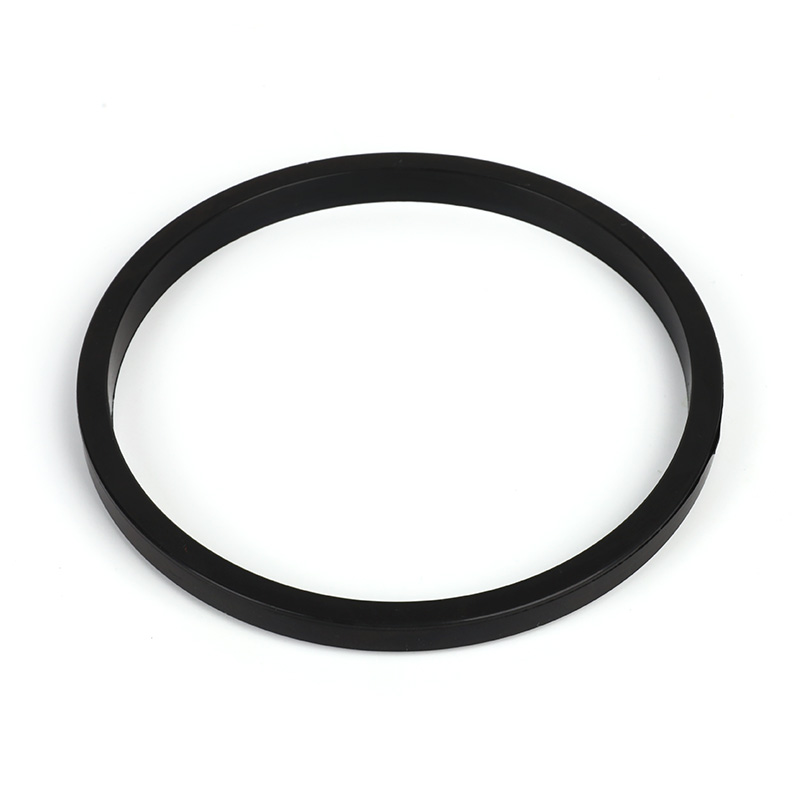
Sealing parts are used in many different types of equipment, sometimes in places that are not easy to notice.
Hydraulic systems are one of the clearest examples. Inside these machines, fluid is pushed through closed spaces to create force. The parts inside are always under pressure, and there are many points where metal parts meet and move. Sealing components are placed in these meeting points so the fluid does not escape while the machine is working.
Air compression equipment also depends on sealing. Air is compressed again and again inside a closed chamber. If there is even a small gap somewhere, the pressure inside does not build up smoothly. In daily use, this may show as a machine that feels slower or less steady than usual.
Oil circulation systems are another common case. Oil is used to reduce friction and keep parts moving smoothly. It flows through channels and around mechanical parts. If sealing is weak, oil slowly moves out of its path. This is often noticed later as stains around joints or covers.
Rotating machines such as pumps or motors also use sealing parts around shafts and connection points. These areas are under constant movement, so sealing materials need to stay in place even when there is vibration and rotation happening at the same time.
In many workshops, workers do not directly inspect sealing parts during daily checks. Instead, they notice indirect changes, such as:
These signs usually appear slowly, not all at once. That is why sealing problems are sometimes noticed only after other symptoms become visible.
Inside a machine, sealing is not about completely blocking everything with a hard barrier. It is more about filling space in a controlled way so that two surfaces can stay in contact even when conditions change.
When two parts are assembled, they may look fully connected, but on a very small level, there are still tiny gaps between surfaces.
Custom Seals And Gaskets are placed in these areas and compressed when the machine is assembled. Once compressed, the material slightly changes shape and fills those small spaces. It becomes a soft layer between hard surfaces.
During operation, the situation is not stable. Machines start, stop, speed up, slow down, and deal with vibration. Temperature also changes during working time. All of this affects how tightly parts stay together.
In real industrial work, sealing problems rarely appear in a dramatic way. More often, they develop quietly and are noticed only when the machine behavior starts to feel slightly different from normal.
One of the common situations is slow leakage. It does not always mean liquid is dripping out. Sometimes it appears as a thin film near a joint, or a slight damp area that slowly expands over time. Workers may notice it during routine cleaning or inspection, not during operation itself.
Another issue is pressure loss inside closed systems. In hydraulic or air equipment, pressure is what drives movement. When sealing contact is not stable, the system may still work, but the response feels weaker than before. For example, a lifting motion may feel slightly delayed, or a pressing action may not feel as firm.
There are also cases where contamination enters through weak sealing points. In oil systems, small particles or external dust may gradually enter the flow path. This does not always stop the machine, but it can affect smoothness and increase internal wear over time.
Some typical signs seen in workshops include:
These signs usually develop slowly, which is why sealing issues are often found during maintenance rather than during operation.
Temperature changes are part of almost every working environment. Machines heat up during operation and cool down when stopped. This cycle repeats again and again, and sealing parts are always part of this process.
When temperature rises, sealing materials may become softer. This helps them adjust to surfaces, but if the change is too strong or repeated too often, the material may slowly lose its original shape.
When temperature drops, the opposite happens. Materials may become slightly harder. In this state, flexibility is reduced, and the sealing contact may not adjust as easily to movement or vibration.
In real applications, this does not usually cause immediate failure. Instead, it gradually changes how the sealing area behaves during operation.
For example, in a machine that runs for long hours:
Over time, this repeated cycle can affect consistency.
Some environments also expose sealing parts to sudden temperature changes. For instance, equipment that is moved between indoor and outdoor spaces may experience faster expansion and contraction cycles. This creates more stress on contact surfaces.
In practical maintenance, temperature-related sealing changes are often observed through:
These changes are usually gradual and not easy to notice in early stages.
Even when sealing parts are well designed and made from suitable materials, installation still plays a large role in how they perform in real equipment.
In industrial environments, installation does not always happen in controlled conditions. Sometimes it is done in narrow spaces, sometimes under time pressure, and sometimes on equipment that is already partially worn.
Another common issue is over-compression. When sealing parts are pressed too tightly during installation, they may lose elasticity earlier than expected. On the other hand, if compression is too loose, the sealing contact may not be strong enough to hold pressure.
A simple way to understand installation influence:
In real workshop conditions, installation space is often limited. Technicians may need to work around other components, which increases the chance of slight positioning errors.
Another point that is sometimes overlooked is surface condition before installation. If the contact surface has dust, oil residue, or small scratches, sealing performance may be affected even if the part itself is in good condition.
In practice, many sealing issues that appear later are not caused by material failure, but by small installation differences that are difficult to notice at the beginning.
In industrial equipment, sealing parts are usually not monitored every day in detail. Instead, they are checked during scheduled maintenance or when machine behavior starts to change slightly.
Simple inspection habits can help extend the stable working time of sealing components.
One basic practice is visual checking during cleaning. When machines are wiped down, it becomes easier to notice small oil marks, surface changes, or uneven contact areas. These signs often appear before actual leakage becomes serious.
Another practice is listening to machine behavior. In many workshops, experienced workers can notice small changes in sound. A slightly different operating tone may indicate that pressure or contact conditions inside the system have changed.
Maintenance work often includes checking:
In real use, sealing components do not fail in a single step. They usually go through gradual changes. At the beginning, performance may still feel normal. Later, small differences appear during operation. Only after some time does leakage or instability become more noticeable.
Replacement timing is often based on these gradual changes rather than fixed rules. Some parts may remain stable for longer periods, while others may show wear earlier depending on working conditions.
Environmental factors also influence maintenance needs. Dusty environments, high vibration areas, or systems with frequent pressure changes often require closer attention.
In many factories, sealing maintenance is part of a wider routine that includes cleaning, lubrication checks, and connection tightening. This combined approach helps keep equipment running in a more consistent way over time.
In simple terms, sealing works in two basic conditions:
| Condition | What Happens | What The Sealing Part Does |
|---|---|---|
| Not working | No movement, low pressure | Stays in shape and keeps contact |
| Working | Movement, pressure changes, vibration | Adjusts and keeps filling small gaps |
What matters in real use is not only whether leakage is stopped, but whether the contact stays stable while everything around it is changing.
If the sealing material is too hard, it may not adjust to small movements. If it is too soft, it may lose shape under pressure. In real equipment, finding a balance between these two behaviors is important.
In real industrial work, material choice is usually based on what the machine actually experiences every day, not just on general description.
Rubber-based materials are widely used because they can handle uneven surfaces. When compressed, they can fill small spaces that are difficult to eliminate during assembly. This makes them suitable for parts that need flexibility during operation.
In oil systems, material behavior changes more noticeably over time. Some sealing materials may slowly become softer after long exposure to oil, while others may keep their shape more steadily. In maintenance work, this is often seen when old sealing parts are removed and compared with new ones.
Temperature is another factor that cannot be ignored. Machines rarely stay at the same temperature during use. They heat up while running and cool down when stopped. This cycle repeats many times. Over time, it affects how sealing materials behave under pressure.
A simple view of material behavior in different conditions:
| Working Condition | What Material May Do | What It Means In Use |
|---|---|---|
| Oil exposure | May soften or change shape slightly | Needs stable resistance to oil |
| Temperature change | Expands or contracts slightly | Affects contact tightness |
| Vibration | Needs flexibility to stay in place | Reduces loosening during operation |
| Fixed sealing area | Needs to hold shape over time | Maintains stable contact |
In factories, material selection is often adjusted based on real experience from machine operation, not only from design expectations.
Inside industrial machines, not all contact surfaces are simple or uniform. Even machines that look similar from the outside may have different internal structures depending on how they are built and what they are used for.
Standard sealing shapes can fit simple and regular contact points. But in many real cases, the internal shape of the machine is not fully regular. There may be corners, edges, or narrow spaces where a standard shape does not fully match the surface.
When this happens, small uncovered areas can remain. These small areas may not cause immediate problems, but over time they can become weak points where leakage starts.
Custom shapes are made to match the real structure inside the machine. Instead of forcing the machine to adapt, the sealing part is adjusted to fit the actual space.
Common situations where custom shapes are used include:
For example, rectangular sealing rings are often used where straight edges meet under pressure. A round shape may leave small gaps at the corners, while a shaped design can match the contact area more closely.
In simple terms:
In real operation, better matching often helps sealing stay stable for a longer time.
RECOMMENDED PRODUCTS

product center
Contact Info
+86-576-88024290
txm@zhejianghaiwei.com
No. 515, Jiutang South Road, TaizhouBay New District, Taizhou, Zhejiang, China.

Vehicle Rubber Seals Factory