 中文简体
中文简体
 English
 русский
 Español
 日本語
日本語
 Deutsch
 Tiếng Việt


+86-576-88024290
Search
24 02, 2026
Press & Media
Industrial equipment is evolving toward more compact layouts and increasingly specialized structures. Traditional circular seals still serve many applications, yet they cannot always align with irregular grooves or angled contact surfaces. This shift has encouraged engineers to explore Special Shape Seal Rings as a practical solution for modern mechanical challenges.
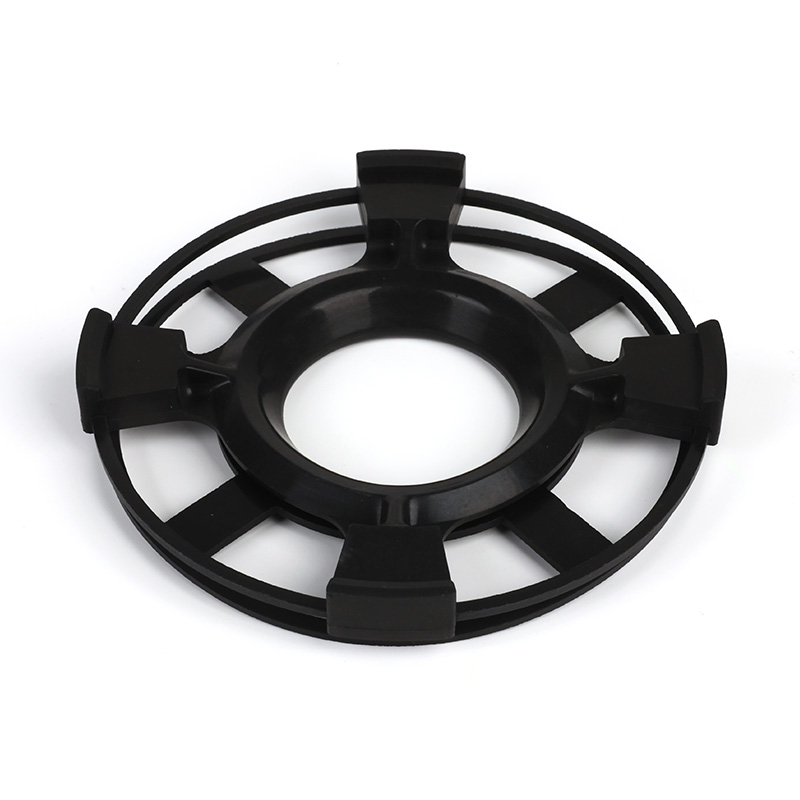
Rather than forcing machinery to adapt to a standard component, customized seals allow the sealing element to follow the natural geometry of the equipment. This design freedom supports smoother integration and reduces the need for structural compromise during product development.
As manufacturing becomes more refined, the demand for adaptable sealing strategies continues to grow across multiple industries.
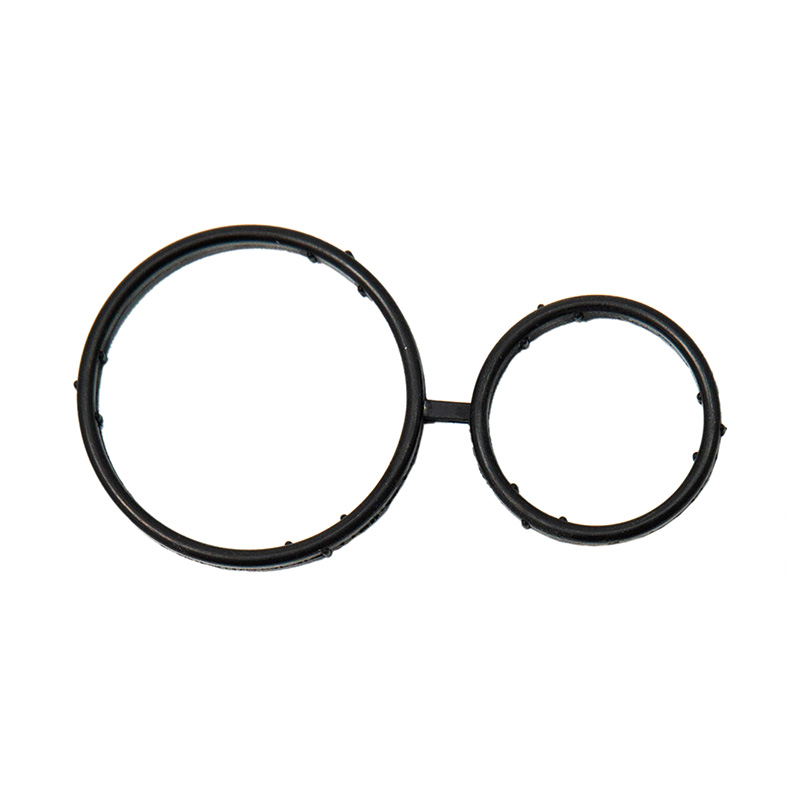
The primary difference lies in geometry. Special Shape Seal Rings are engineered to match nontraditional pathways where standard rings may struggle to maintain consistent contact.
These seals often feature asymmetrical contours, stepped edges, or multi-surface contact points that help distribute pressure more evenly. Because of this, they are frequently selected for assemblies where space is limited or where components intersect at unusual angles.
Instead of viewing them as a replacement for traditional seals, many designers treat them as an extension of sealing technology — one that expands what is mechanically possible.
Mechanical designers increasingly prioritize efficiency without expanding product size. Special Shape Seal Rings contribute to this objective by allowing sealing paths to follow the equipment rather than dictate it.
These factors help explain why customized seals are appearing in next-generation machinery, where precision and spatial efficiency are closely connected.
Shape alone does not determine sealing performance. The material must also respond well to environmental exposure, such as temperature variation, fluid contact, and mechanical stress. Manufacturers producing Special Shape Seal Rings typically guide buyers toward compounds suited to their operational conditions.
Elastomers known for flexibility are often chosen for applications involving motion, while chemically resistant materials are preferred in fluid-heavy environments. Meanwhile, compounds with stable thermal behavior support equipment exposed to repeated heating and cooling cycles.
Selecting an appropriate material allows the seal to maintain its structure while adapting to operational changes, helping the overall system function with greater consistency.
Producing irregular sealing profiles requires careful tooling and controlled molding processes. Factories specializing in Special Shape Seal Rings often rely on digital modeling to predict how materials will behave during curing, including shrinkage and stress distribution.
After molding, dimensional verification helps confirm that the seal aligns with design specifications. Even subtle variation can influence compression behavior once installed, so precision plays a central role throughout production.
This attention to manufacturing detail supports repeatability — a characteristic highly valued by equipment producers managing large-scale assembly.
The adaptability of Special Shape Seal Rings allows them to support a wide range of technical environments. Their presence is especially noticeable in sectors where mechanical layouts rarely follow simple patterns.
Automotive assemblies, for instance, frequently involve intersecting channels that benefit from tailored sealing edges. Industrial automation systems also rely on compact joints, making customized geometry particularly useful. In medical devices, where equipment must fit within confined housings, specialized seals help maintain structural efficiency.
Across these scenarios, the ability to match the seal to the design often reduces the need for later modification.
Even well-designed components perform better when installed with care. Because Special Shape Seal Rings may include directional features, alignment deserves attention during assembly.
Clean seating surfaces support consistent compression, while balanced fastening pressure allows the seal to adapt naturally once the system begins operating. Avoiding excessive stretching during placement also helps maintain the intended profile.
These practical considerations may appear minor, yet they contribute significantly to how the seal behaves over time.
As equipment becomes more specialized, purchasing teams are expanding their evaluation criteria. Sourcing Special Shape Seal Rings is often less about immediate availability and more about long-term compatibility with product architecture.
Buyers frequently value suppliers capable of early-stage technical communication, as collaboration during the design phase can reduce adjustment cycles later. Stable production capacity and clear quality documentation also support smoother supply planning.
This broader procurement perspective reflects how customized components are becoming part of strategic manufacturing rather than occasional exceptions.
At a glance, custom sealing solutions may appear more resource-intensive than standardized parts. However, when Special Shape Seal Rings help simplify assembly or reduce the number of supporting components, the overall production workflow can become more efficient.
Over time, this integrated approach may support predictable maintenance intervals and reduce the likelihood of structural redesign. Looking beyond unit pricing often reveals the operational value created by a seal that fits correctly from the start.
Such long-range thinking is increasingly common among manufacturers focused on stability and process optimization.
RECOMMENDED PRODUCTS

product center
Contact Info
+86-576-88024290
txm@zhejianghaiwei.com
No. 515, Jiutang South Road, TaizhouBay New District, Taizhou, Zhejiang, China.

Vehicle Rubber Seals Factory