 中文简体
中文简体
 English
 русский
 Español
 日本語
日本語
 Deutsch
 Tiếng Việt


+86-576-88024290
Search
03 07, 2026
Industry Updates
Inside many mechanical assemblies, sealing parts sit in narrow spaces where fluid or pressure tries to escape through very small gaps. Those gaps may not be visible, yet under working pressure they become enough for leakage or loss of stability. A seal ring fills that space and keeps two surfaces pressed in a controlled way.
Sealing is not only a blocking function. Pressure inside a closed chamber often spreads in uneven patterns. Without a buffer layer, that force transfers directly into metal or rigid housing, which slowly changes contact condition. A sealing element softens that interaction and keeps force behavior more stable.
Rectangular Seal Ring structures are usually placed where housing walls follow straight lines. In those situations, sealing is shaped by geometry of the structure itself, not by a curved design.
Shape decides how contact begins and how pressure travels after compression. A rectangular form creates long straight contact zones instead of point or curved contact. That simple change affects how load spreads once the system starts working.
When compression increases, contact does not concentrate in one spot. It spreads along edges, and each side of the rectangle takes part in holding pressure. That helps avoid sharp stress points that often appear in small curved contact areas.
In real use, several patterns are often seen:
Rectangular Seal Ring behavior fits naturally into flat mechanical layouts where sealing path already follows straight boundaries.
Not every mechanical housing allows circular sealing space. Many structures are built with straight internal walls because of space limits or machining methods. In those cases, forcing a round seal would leave unused gaps or uneven contact zones.
A rectangular shape fills that space more naturally. Corners and edges of the housing are used instead of left empty, which helps create a continuous sealing path.
Common reasons for using this form include:
Water Pump Seal Supplier requirements often match these conditions, since fluid movement in pump housing tends to follow structured channels instead of open circular cavities.
Material choice changes how sealing reacts under repeated pressure. Some materials recover shape quickly after compression, while others slowly lose elasticity after long use. That difference becomes more visible when sealing lines follow straight edges.
In rectangular layouts, each edge section must respond in a similar way. If one side becomes softer or harder than others, pressure balance shifts slightly, and sealing line becomes uneven.
Important material behaviors include:
Rectangular Seal Ring performance depends less on a single strong property and more on how evenly material behaves along its entire shape.
Groove design and seal shape must match closely. If groove depth or width is slightly off, rectangular edges no longer sit evenly. One side may press harder while another side stays loose.
That imbalance does not always show immediately. It often appears after repeated pressure cycles when wear starts forming unevenly across contact areas.
Typical effects include:
Even when sealing ring itself is in good condition, groove mismatch alone can reduce performance consistency.
| Seal Type | Contact Pattern | Pressure Spread | Practical Behavior |
|---|---|---|---|
| Rectangular Seal Ring | Straight edge contact | Even along perimeter | Stable sealing line |
| Round profile | Curved contact zone | More central load | Flexible contact area |
| Misaligned fit | Partial edge contact | Uneven distribution | Leakage risk increases |
| Worn groove | Broken contact line | Irregular pressure | Reduced stability |
Contact surfaces inside groove affect how sealing ring settles during compression. If surface is rough or has small residue, friction increases and seal may not fully seat into position. That creates small gaps along edges.
With smoother surfaces, seal moves into place more naturally and contact becomes more uniform. Over time, repeated compression still creates wear marks, especially in zones where pressure is stronger.
Surface condition usually affects:
Rectangular Seal Ring performance stays closely linked with how smooth and stable these surfaces remain during repeated use.
Sealing performance often depends on something that looks simple at installation stage. A small shift in position or a slight twist during fitting can change how edges sit inside the groove. Once a rectangular seal is not seated evenly, pressure starts to distribute in an unbalanced way.
During assembly work, seal may be pressed into place manually or guided through a slot. If one corner enters earlier than others, internal tension builds across the body. That tension does not disappear after installation. It stays inside material and affects how sealing reacts under pressure later.
Common installation issues seen in practice:
Even when sealing part itself is in good condition, installation mismatch can still influence final behavior in a noticeable way during repeated use cycles.
Inside mechanical systems, pressure rarely stays constant. It rises during operation, drops during idle phases, and sometimes changes quickly depending on system load. Seal structure must respond to all these shifts without losing contact stability.
Rectangular sealing layout reacts to pressure along its straight edges. When pressure increases, force spreads outward along perimeter lines. If distribution stays balanced, sealing line remains stable. If pressure concentrates in one area, deformation may appear locally.
Typical pressure-related behaviors include:
Rectangular Seal Ring structures tend to perform more consistently when pressure changes remain gradual rather than sudden or uneven.
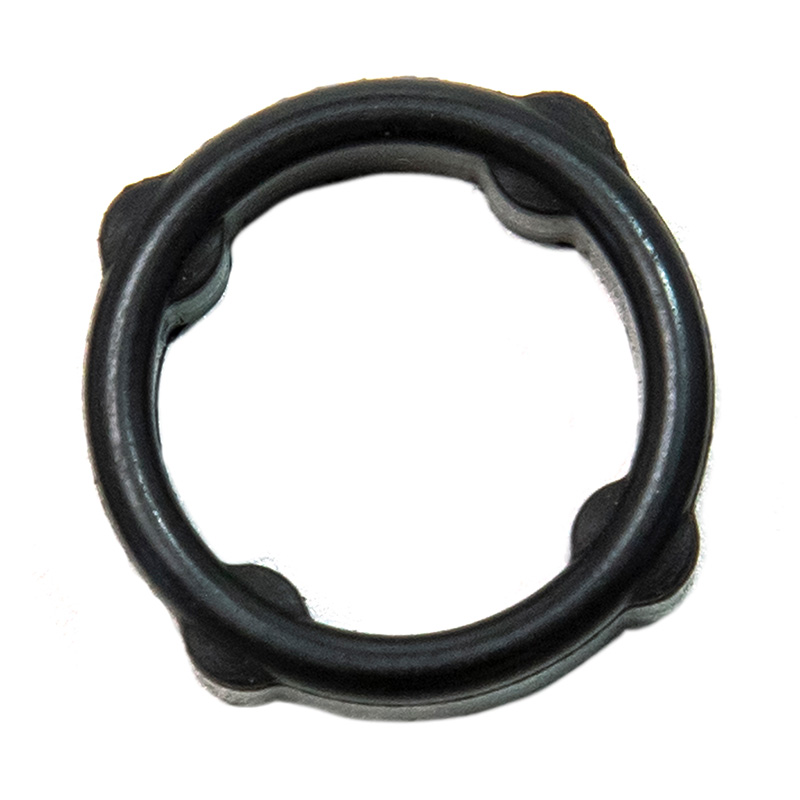
In fluid systems such as pumps, sealing structure must deal with continuous movement of liquid and repeated pressure variation. Housing design often follows fixed channels, and sealing parts must match those internal shapes.
Rectangular layouts become practical when pump casing uses flat internal surfaces or elongated flow paths. In those cases, sealing does not need to adapt to curved geometry, but instead follows structure lines already present inside housing.
Design decisions often depend on:
Water Pump Seal Supplier selection usually focuses on matching sealing geometry with actual housing structure rather than changing system design to fit seal shape.
Sealing components operate under repeated stress cycles. Over time, even stable materials begin to show wear along contact edges. That wear does not appear suddenly, but builds slowly through repeated compression and release.
Maintenance work helps identify changes before sealing performance becomes unstable. Inspection often focuses on edge condition, surface smoothness, and groove cleanliness.
Common maintenance observations include:
When replacement is delayed too long, small leakage points may begin to appear during pressure changes. Regular inspection helps maintain more stable sealing behavior across long operating periods.
| Condition | Material State | Sealing Effect |
|---|---|---|
| Regular maintenance | Stable elasticity | Consistent sealing line |
| Light wear stage | Minor edge change | Slight pressure variation |
| Advanced wear | Reduced recovery | Occasional leakage |
| Poor maintenance | Groove contamination | Unstable sealing contact |
Rectangular sealing form is often chosen not because of appearance, but because it fits naturally into straight-edged mechanical layouts. When groove structure, material response, installation accuracy, and pressure conditions align, sealing behavior becomes more predictable across repeated cycles.
In practical systems, Rectangular Seal Ring design supports stable contact along flat surfaces, especially where space limitation and structured housing shape guide overall mechanical layout.
RECOMMENDED PRODUCTS

product center
Contact Info
+86-576-88024290
txm@zhejianghaiwei.com
No. 515, Jiutang South Road, TaizhouBay New District, Taizhou, Zhejiang, China.

Vehicle Rubber Seals Factory